

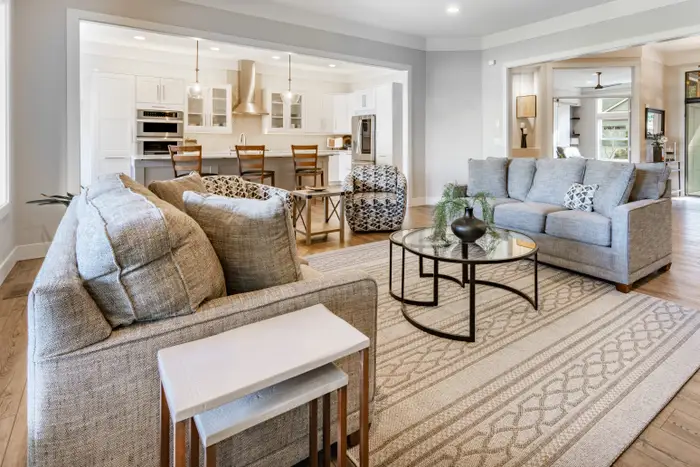
Minimal rugs are a powerful design tool, but common mistakes—like choosing the wrong size, ignoring texture, or overloading a room—can make a clean space feel chaotic. This guide covers the six most frequent decorating errors and how to avoid them when you buy rugs for a minimalist home.
Minimal rugs are having a moment. Clean lines, restrained color, and intentional design have moved from high-end showrooms into everyday homes—and for good reason. A well-placed rug can define a room, add warmth, and pull a space together without adding visual noise.
But here’s the catch: minimalism leaves little room for error. In a maximalist space, one off-choice gets lost in the crowd. In a minimal space, it sticks out immediately. A rug that’s slightly too small, placed an inch off-center, or made from a flimsy material can undermine an entire room’s design.
The good news? These mistakes are easy to avoid once you know what to look for. Here are the six most common decorating errors people make with minimal rugs—and how to fix them.
Mistake #1: Choosing the Wrong Rug Size
Size is the most common mistake, and it’s also the most damaging to a minimalist aesthetic.
A rug that’s too small floats in the middle of the room with no connection to the furniture around it. It makes the space feel fragmented and awkward—the opposite of what minimalism aims for. On the other end, an oversized rug can crowd the room and draw too much attention to the floor.
The fix: In a living room, front legs of the sofa and chairs should rest on the rug. In a bedroom, the rug should extend at least 24 inches beyond the sides and foot of the bed. Measure your room before you buy rugs—guessing almost always leads to regret.
A good rule of thumb: leave 12 to 18 inches of bare floor between the rug’s edge and the wall. This framing effect keeps the space feeling open and intentional.
Mistake #2: Ignoring Color and Pattern Balance
“Minimal” does not mean neutral gray or off-white on repeat. That’s a common misreading of the style. Minimal design is about restraint, not absence.
Choosing a rug with a pattern that clashes with your furniture or picking a color that fights with your walls can make a clean room feel busy. On the other hand, choosing something completely flat and lifeless can make the space feel cold.
The fix: Work with your existing palette. If your walls are warm white and your furniture is natural wood, a rug in muted terracotta or dusty sage adds interest without breaking the mood. Subtle geometric patterns or tone-on-tone designs work well in minimal spaces. Avoid anything with more than two or three distinct colors if simplicity is your goal.
When buying minimal rugs, hold a sample against your existing decor in natural light before committing.
Mistake #3: Poor Rug Placement
You can pick the perfect rug and still get the placement wrong. Placement shapes how a space flows, how zones feel, and whether a room looks thoughtfully designed or thrown together.
Common placement errors include pushing the rug too close to the wall, leaving too much furniture hanging off the edge, or centering a rug in a room where the furniture is offset.
The fix: Anchor your rug to your furniture grouping, not the room itself. The rug should define a zone—a seating area, a dining space, a reading nook. Once that zone is established, the rest of the room falls into place naturally.
In hallways and entryways, run the rug lengthwise and leave a few inches of floor showing on each side. This creates a sense of direction and structure without blocking natural movement.
Mistake #4: Overlooking Texture and Material Quality
Minimal design puts quality front and center. When there are fewer objects in a room, each one carries more weight. A cheap, flat rug will show its flaws quickly—pilling, fraying, fading—and in a minimal space, there’s nowhere to hide them.
Texture also plays a functional design role. A flat-woven rug in a room with smooth surfaces and sharp lines can feel cold. A hand-knotted wool or silk rug adds depth and warmth without adding color or pattern.
The fix: Invest in quality. Handmade Rugs in India—particularly those from Bhadohi, one of the largest carpet-weaving hubs in the world—are widely recognized for their craftsmanship and durability. Brands like The Ambiente, which works with over 4,000 artisans and is backed by 30+ years of manufacturing expertise through parent company Bhadohi Carpets, produce handwoven silk and wool rugs built to last.
When you buy rugs made by skilled artisans, you’re not just buying a floor covering—you’re buying a piece that holds up over years of daily use.
Mistake #5: Using Too Many Rugs
Multiple rugs in one home can work well. Multiple rugs in one room almost never does—especially in a minimal space.
Layering rugs, placing them too close together, or using rugs in every room without a cohesive plan creates visual clutter. Each rug competes for attention, and the cumulative effect is busy, not balanced.
The fix: Treat each rug as a deliberate design decision. Ask yourself: what zone does this rug define? What purpose does it serve? If you can’t answer clearly, the rug probably doesn’t belong there.
If you do use multiple rugs across a home, keep a common thread—similar materials, a shared color tone, or a consistent style. This creates cohesion without rigidity. Restraint is the defining quality of a minimalist approach, and it applies to rugs as much as anything else.
Mistake #6: Neglecting Maintenance and Care
Minimal rugs show wear more visibly than patterned ones. A light-colored, low-pile rug will show foot traffic, pet hair, and staining faster than a richly patterned alternative. That’s not a reason to avoid them—but it is a reason to care for them properly.
Neglecting maintenance can age a rug quickly, and in a minimal space, a worn-out rug is a major design liability.
The fix: Vacuum minimal rugs regularly—at least once a week in high-traffic areas. Rotate the rug every six months to even out wear. Address spills immediately with a clean cloth and cold water. For deep cleaning, follow the manufacturer’s care instructions, and for high-quality handmade rugs, consider professional cleaning once a year.
If you buy rugs made from natural fibers like wool or silk, avoid harsh chemical cleaners. These materials are durable, but they respond best to gentle, consistent care.
Buy Rugs with Purpose—and They’ll Do the Work for You
Minimal rugs are one of the most effective tools in a home decorator’s kit. They ground furniture, define spaces, and add warmth without demanding attention. But their simplicity is also what makes them unforgiving when the basics go wrong.
Avoid the six mistakes above—wrong size, poor color choices, bad placement, low-quality materials, too many rugs, and neglected maintenance—and your minimal rug will do exactly what it’s supposed to: make your space feel effortless.
When you’re ready to buy rugs that are genuinely built to last, consider Handmade Rugs in India from artisan-led brands like The Ambiente. Founded by Avani Khandelwal and rooted in Bhadohi’s weaving tradition, The Ambiente offers hand-knotted silk and wool rugs crafted by over 4,000 artisans, combining traditional technique with modern design. For anyone serious about minimal, quality-first decorating, that’s a strong place to start.
Frequently Asked Questions
What size minimal rug should I use in a living room?
For most living rooms, a rug should be large enough for the front legs of all main seating pieces to rest on it. A common starting size is 8×10 feet, but the right dimensions depend on your room’s layout. Measure the furniture grouping first, then choose a rug that extends 12–18 inches beyond its edges on each side.
Are handmade rugs in India good for minimalist interiors?
Yes. Handmade Rugs in India—especially those from Bhadohi—are known for their fine craftsmanship, natural materials, and subtle textures. These qualities suit minimalist interiors well, since the focus is on material quality rather than bold patterns. Wool and silk rugs from skilled artisans hold their shape and appearance longer than machine-made alternatives.
How many rugs should I use in a minimal home?
There’s no strict number, but each rug should serve a clear purpose—defining a zone or anchoring a furniture grouping. One rug per distinct space (living area, bedroom, dining area) is a solid baseline. Avoid placing rugs too close together or in spaces where they don’t define a clear zone.
What colors work best for minimal rugs?
Muted, earthy tones like warm white, sand, charcoal, dusty sage, and soft terracotta work well in most minimal spaces. The key is picking a color that complements your existing palette rather than competing with it. Tone-on-tone patterns and subtle textures add visual interest without breaking the minimal aesthetic.
How often should I clean a minimal rug?
Vacuum minimal rugs at least once a week in high-traffic areas. Rotate them every six months to distribute wear evenly. For deep cleaning, follow the rug’s care instructions—natural fiber rugs like wool and silk benefit from professional cleaning once a year to maintain their appearance and longevity.
Where is the best place to buy quality minimal rugs in India?
The Ambiente, based in Bhadohi and with a flagship store in New Delhi, is a reputable option. Backed by 30+ years of manufacturing experience through Bhadohi Carpets, the brand offers handcrafted silk and wool rugs across a range of styles, including designs suited to minimalist interiors.